

Fuji Film Presets vs. Real Film: Key Differences
When deciding between Fuji Film presets and real film, the choice depends on your priorities. Presets are digital tools that mimic the look of Fujifilm film stocks in editing software, offering convenience, cost savings, and flexibility. In contrast, real film provides a tactile, analog experience with organic grain and rich colors but comes with higher costs and a slower process.
Key Points:
- Presets: One-time purchase (around $99-$200), faster editing, works with any camera, but lacks the depth of real film.
- Real Film: Physical rolls with unique textures and tones, but costs $24+ per roll plus development fees and is time-intensive.
Quick Comparison:
| Aspect | Presets | Real Film |
|---|---|---|
| Cost | One-time, $99-$200 | $24+ per roll + development fees |
| Convenience | Instant results, digital workflow | Time-consuming, physical handling |
| Visual Quality | Digital emulation, consistent | Organic grain, unique per roll |
For speed and affordability, presets are ideal. For a hands-on, analog feel, real film stands out. Some photographers even combine both for versatility.
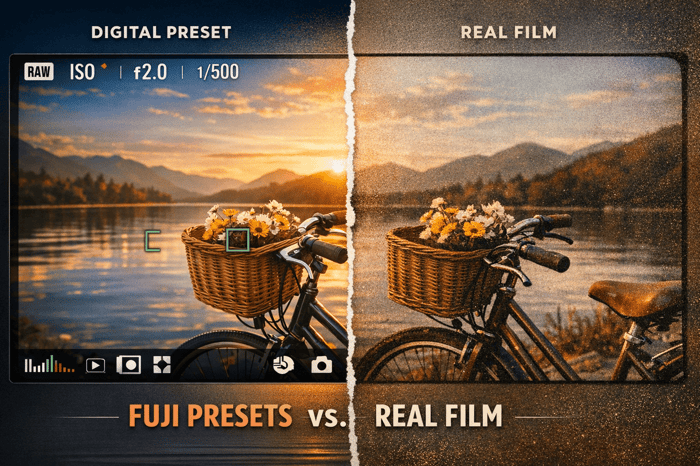
Fuji Film Presets vs Real Film: Complete Comparison Guide
We Compared Film Simulations to the ACTUAL Film. Here's What Happened!
sbb-itb-b27063b
Fuji Film Presets: Benefits and Drawbacks
Fuji Film presets offer a way to achieve that classic film aesthetic in digital photography without the ongoing expenses tied to physical film. For instance, a single preset pack from Mastin Labs is priced at about $99, while bundles like RNI All Films 5 Pro provide over 180 presets for roughly $192. When you compare this to the costs of real film - where every roll and its development add up quickly - the financial advantage is clear. With presets, you pay once and can use them across thousands of photos without additional costs.
Another advantage of presets is their flexibility. When shooting in RAW, you can apply, adjust, or even remove presets without permanently altering the original image. This non-destructive editing allows you to experiment freely, whether you’re looking to replicate Velvia’s vibrant tones or ACROS’s dramatic monochrome. As Mastin Labs explains:
Presets can be applied, removed, and adjusted on top of an unedited image, which means you can undo anything you don't love without changing the unedited image for good.
To put it in perspective, a memory card the size of a postage stamp can store thousands of photos for less than the cost of a single roll of film and its processing.
However, presets do come with some drawbacks. For starters, they require editing software like Adobe Lightroom or Capture One, which not only adds to the cost but also demands a certain level of expertise. Professional photographer Itamar Haim highlights a key limitation:
A Lightroom preset applies the exact same set of slider adjustments to every single photo, no matter what... This forces you to manually re-edit every photo, defeating the purpose of the preset.
This uniformity often means you’ll need to manually tweak settings like exposure and white balance, especially when dealing with varied lighting conditions.
Another challenge is the gap in authenticity. Real film achieves its distinct look through layers of light-sensitive materials and intricate chemical processes - something digital editing tools can only approximate. Russell Bloodworth shares his perspective:
Although I think RNI does a great job of emulating film (broadly speaking), I have not been all that pleased with the grain effects that Lightroom uses. They just feel inauthentic to me.
While high-quality presets from reputable brands come close to mimicking the film look, they remain digital interpretations rather than exact replicas of the analog process.
Pros and Cons of Fuji Film Presets
| Pros | Cons |
|---|---|
| Flexible, non-destructive editing | Requires additional editing software |
| Cost-effective with one-time purchase | Doesn't fully replicate the authentic film look |
| Speeds up workflow with batch editing | Uniform adjustments often need manual tweaks |
Presets are especially useful for streamlining batch editing, making them a great tool for projects like weddings or commercial shoots. They also offer a variety of film-inspired looks through platforms like Presets.io (https://presets.io). While presets can serve as a solid starting point, it’s essential to fine-tune them to suit the unique lighting and mood of each image.
Real Fuji Film: Benefits and Drawbacks
Shooting with real film offers a distinct texture and color quality that’s hard to replicate digitally. The grain you see in film isn’t just a filter or effect - it’s a physical reaction of silver halide crystals to light, giving photos a natural, organic feel. As FilmProcessing.co.uk puts it:
Film handles highlights beautifully. Overexposed areas still retain details, whereas digital can blow them out completely.
One of the standout features of film is its approach to color. Fuji film stocks, for example, are crafted with incredible detail. They contain nine or more layers of light-sensitive material, each tuned to specific wavelengths and dye absorption. This complexity creates what are often called “memory colors” - tones that resonate emotionally because they align with how we naturally recall colors, like warm skin tones or vibrant sky blues.
But let’s face it, real film isn’t always convenient. A single roll of Kodak Portra 400 can cost over $24, and it only gives you 24 to 36 exposures. Add in development and scanning fees, and the costs quickly add up. Plus, unlike digital RAW files, film doesn’t allow much wiggle room for post-processing. The colors and tones are locked in once the chemical development is done.
Another challenge is the limited number of shots per roll. With only a few dozen frames, every click of the shutter counts. This forces photographers to carefully plan their composition, lighting, and exposure. While this can sharpen your skills, it also means there’s little room for error - no instant previews, no quick fixes.
Pros and Cons of Real Film
| Pros | Cons |
|---|---|
| Organic grain and texture | High costs (film, development, scanning) |
| Rich, emotionally resonant color tones | Time-intensive process |
| Tangible, physical format | Limited post-processing flexibility |
| Excellent highlight retention | Fixed ISO for each roll |
| Encourages deliberate shooting | Delayed results (days or weeks) |
Side-by-Side Comparison
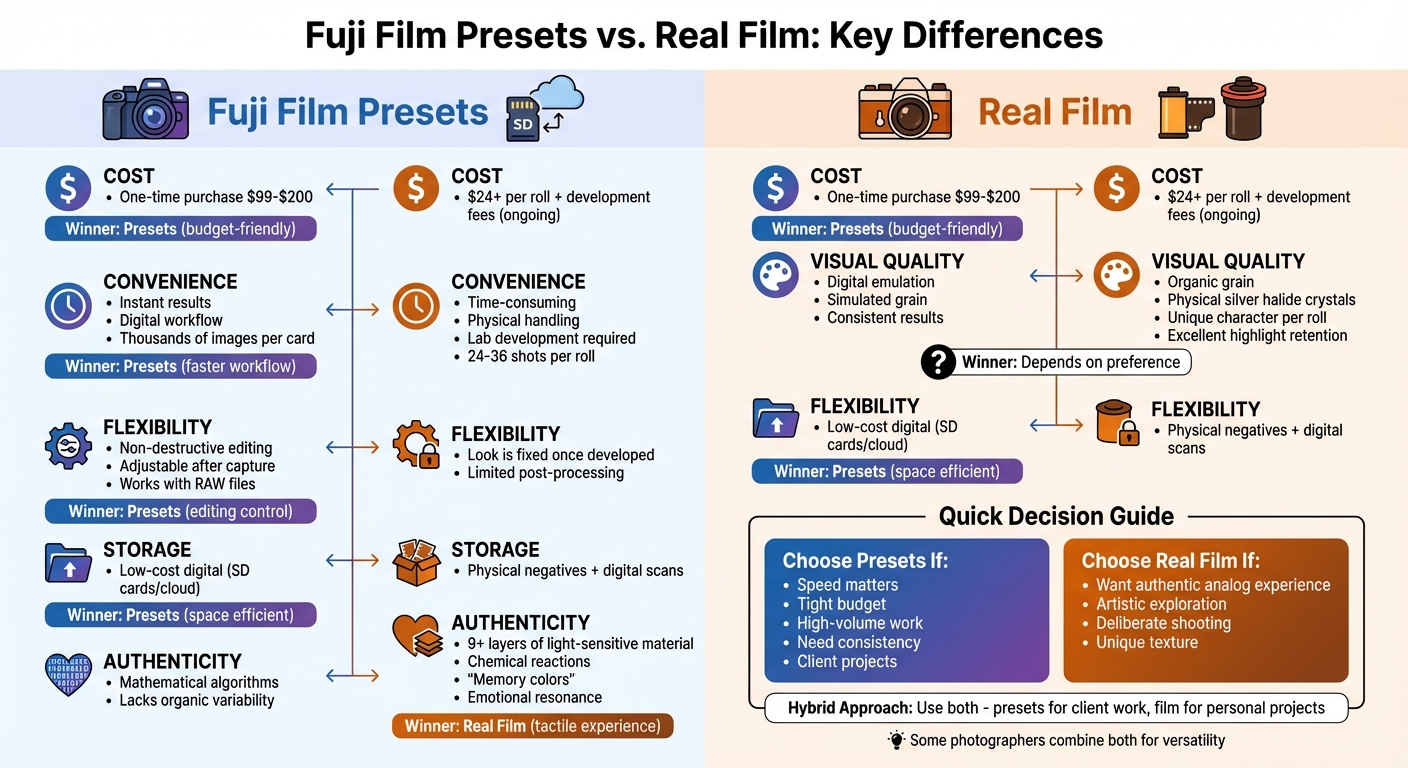
Let’s break down the key differences between Fuji film presets and real film in terms of aesthetics, cost, and convenience. This comparison highlights how each option stacks up, so you can decide what works best for your creative process.
When it comes to visual results, real film achieves its colors through intricate chemical reactions. As Imaging Resource points out:
Film's rendering of color is an enormously complex process that's virtually impossible to mimic with simple slider adjustments in an image editor.
In contrast, Fuji film presets rely on mathematical algorithms to replicate these colors. While they provide consistent and predictable results, they may lack the organic variability and unique character that many photographers cherish in real film.
Cost is another major factor. Real film requires ongoing expenses for each roll and its development, which can quickly add up. On the other hand, digital film presets involve a one-time purchase, typically ranging from a few dollars to about $100 for professional packs, and can be applied to an unlimited number of digital photos.
When it comes to convenience, digital workflows have a clear edge. Presets allow for instant results and let you shoot and edit thousands of frames effortlessly. Real film, however, demands physical handling, lab development, and patience. As Mastin Labs aptly states:
shooting real film is pricey and unforgiving, and the results can be unpredictable - especially when you're still learning.
Here’s a quick table summarizing these differences:
Comparison Table: Fuji Film Presets vs. Real Film
| Attribute | Fuji Film Presets | Real Film | Winner/Notes |
|---|---|---|---|
| Visual Results | Digital color emulation; simulated digital grain; consistent | Organic color chemistry; physical silver halide grain; unique character per roll | Depends on personal preference |
| Cost | One-time purchase (ranging from a few dollars to around $100) | Recurring costs for each roll plus development/scanning | Presets for budget-conscious shooters |
| Convenience | Instant results; thousands of images per memory card; easy digital sharing | Time-consuming; requires lab development and offers limited shots per roll | Presets for faster workflow |
| Flexibility | Non-destructive editing allows for adjustments after capture | The look is fixed once developed | Presets for editing control |
| Storage | Low-cost digital storage (e.g., SD cards or cloud) | Involves managing physical negatives along with digital scans | Presets for space efficiency |
Ultimately, the choice between presets and real film boils down to your priorities - whether you value the convenience and affordability of digital tools or the timeless charm and unpredictability of analog photography.
The Master Preset Bundle: Volume II

$69.00
$990.00
The Master Preset Bundle Volume II New Looks. More Styles. Even More Creative Control. Get 66 brand-new Presets.io collections in one powerful Volume 2 bundle — crafted to expand your editing range, refresh your workflow, and deliver polished, professional results in… continue reading
When to Use Fuji Film Presets Instead of Real Film
Fuji film presets excel when speed and efficiency are top priorities. In today’s fast-paced world, especially with the demands of social media, quick turnaround times are essential. As photographer John Peltier explains:
"All that time I would have been lost in the rabbit hole of post-processing can now be spent on another photo outing, with family, doing other hobbies, etc. That's the point."
The time saved from skipping extensive post-processing can be redirected to capturing more images or enjoying personal activities.
Another major advantage is the cost savings. While professional preset packs typically cost between $160 and $200 upfront, the expenses tied to shooting real film can add up quickly. Between purchasing film stock, processing fees, and the hours spent scanning and cleaning dust from digital conversions, the total can reach "several thousands of dollars". For those looking for an even more affordable option, mobile apps offer individual film packs at low prices. Platforms like Presets.io provide high-quality Lightroom and mobile presets that deliver a film-inspired aesthetic without the ongoing costs of analog photography.
Presets also shine in professional workflows, where consistency and speed are critical. Wedding photographers, commercial shooters, and anyone working under tight deadlines can apply a cohesive look across hundreds of images in no time. As Mastin Labs highlights:
"Lightroom film presets and Capture One film styles can be used on your digital images, and shooting on a digital camera is much more forgiving and often more practical, especially if you're being paid to take photos."
Another key advantage of presets is their non-destructive editing. Unlike real film, which is "less forgiving" and locks in the final result once developed, presets applied to RAW files offer flexibility. You can tweak exposure, white balance, and contrast even after the photo is taken. This makes presets an excellent choice for photographers still refining their style or anyone seeking creative freedom without the risk of wasted shots. They allow you to align your artistic vision with the convenience and adaptability of digital workflows - something real film simply can’t provide.
Conclusion
Choosing between digital presets and real film isn't about deciding which is better - it’s about finding what aligns best with your creative goals and practical needs. When it comes down to it, the decision revolves around three key factors: cost, workflow, and artistic intent. Fuji film presets are budget-friendly and streamline the editing process, while real film offers a sense of authenticity that’s hard to match. Presets come with a one-time expense, whereas film involves ongoing costs. For professional photographers managing large volumes of images, presets provide speed, consistency, and flexibility - essential for maintaining a polished, cohesive look.
That said, real film brings something special to the table. Its chemical process creates a texture, grain, and color depth that digital presets can mimic but never fully replicate. The tactile quality of real film stands apart:
"They're not replacements for film. If you want film, shoot film."
Modern photography often requires striking a balance between aesthetic authenticity and practical efficiency. Presets shine in high-volume workflows, offering instant edits and the ability to tweak images long after the shoot. However, for those seeking a hands-on creative experience or the artistic growth that comes with working in a darkroom, real film remains a timeless choice.
One way to get the best of both worlds? A hybrid approach. Use digital presets for client projects where efficiency is key, and reserve real film for personal or artistic exploration. Platforms like Presets.io make it simple to find high-quality 35mm film presets for Lightroom and mobile that emulate a film-like style without the recurring expenses. Whether you're drawn to the speed of presets or the authenticity of film, understanding these trade-offs ensures you’re making the right choice for your photography journey.