



Table of Contents
How to Create Custom Preset Folders
Managing Lightroom presets can become overwhelming without a proper system. Custom preset folders offer an easy way to organize your presets by style, project, or genre, saving time and keeping your workflow efficient. Here's how you can set up and manage them:
- Why Use Custom Folders?
They help organize presets for quick access, maintain consistency in edits, and are ideal for collaborative projects. - Steps to Create Folders:
- Open the Presets panel in Lightroom's Develop module.
- Right-click on a preset and select "Create New Folder" or "New Group."
- Name the folder based on its purpose (e.g., "Cinematic", "Wedding").
- Drag and drop presets into the folder or import directly into it.
- Tips for Organization:
- Use clear labels like "Portraits" or "Vintage Film."
- Create a "Favorites" folder for frequently used presets.
- Group presets from third-party collections like Presets.io by their style.
- Backup and Maintenance:
Always back up your presets before reorganizing. Use Lightroom's "Store Presets with Catalog" option to ensure portability and safety.
Organizing presets upfront saves time and keeps your editing process streamlined, whether you're working solo or on a team.
How to Create FOLDER for PRESETS in Lightroom
Prerequisites and Preparation
Before diving into creating custom preset folders in Lightroom, it’s worth taking a few steps to get everything ready. A little preparation can save you a lot of hassle down the road.
Check Lightroom Installation and Updates
First, ensure you have either Lightroom Classic or Lightroom CC installed on your computer. Both versions allow you to create custom preset folders, but their interfaces differ. Lightroom Classic offers more detailed control over presets and folder organization, while Lightroom CC has a simpler, more streamlined approach with fewer nested folder options.
To confirm your software is up to date, open Lightroom, go to the Help menu, and select "Check for Updates." Keeping your software updated ensures you have access to the latest preset management features and compatibility with newer preset formats. Adobe frequently improves how presets are handled, so skipping updates could limit your options.
If you use Lightroom on multiple devices, consider which version best suits your workflow. Lightroom CC automatically syncs presets through Adobe Cloud, making it ideal for seamless cross-device use. On the other hand, Lightroom Classic requires manual setup for sharing presets between devices. Once you’ve confirmed your setup, it’s time to get familiar with how presets work.
Learn Preset Basics
Understanding presets is key to organizing them effectively. In essence, Lightroom presets are collections of saved editing adjustments - like exposure, contrast, color grading, and tone curves - that you can apply to your photos with a single click.
Presets range from subtle tweaks that enhance natural lighting to bold transformations that create specific moods, like vintage or cinematic styles. Some presets are tailored for particular types of photography - portrait presets often focus on skin tones, while landscape presets may emphasize skies and foliage.
Think of presets as starting points. You can apply one to your image and then fine-tune individual settings to match your creative vision. This knowledge will help you group similar presets together when you start building custom folders.
Back Up Existing Presets
While not mandatory, backing up your current presets is a smart move, especially if you’ve spent time collecting or creating them. A backup ensures you won’t lose anything during the reorganization process.
To back up your presets, locate the folder where they’re stored by right-clicking on a preset and selecting "Show in Finder" (Mac) or "Show in Explorer" (Windows). Copy this folder to external storage for safekeeping. Alternatively, you can enable the "Store Presets with Catalog" option under Preferences > Presets > Location. This setting ties your presets to your Lightroom catalog file, making them portable if you move the catalog to another device.
If you’ve downloaded preset collections from sources like Presets.io, refer to their installation guides for tips on importing and organizing new presets. These resources often provide helpful advice for keeping your preset library orderly as it grows.
How to Create Custom Preset Folders
Setting up custom folders for your presets can make your editing process more efficient and organized.
Open the Presets Panel
Start by navigating to the Develop module in Lightroom. If the Presets panel is collapsed, expand it to view your current presets. Here, you'll see all your existing presets arranged in their respective folders or groups.
Create a New Preset Folder
To create a new folder, right-click on any user or custom preset in the panel. Avoid selecting Adobe's built-in presets, as these cannot be moved or reorganized. From the context menu, choose "New Group" or "Create New Folder", depending on your Lightroom version.
When prompted, give your new folder a descriptive name that reflects its purpose. For instance, you might name folders "Black & White", "Cinematic", "Wedding Ceremony", or "Winter 2025." Clear and consistent labeling makes it easier to find the presets you need during editing.
The new folder will appear instantly in your Presets panel, ready for you to start organizing. You can create as many folders as necessary - there’s no limit. Once the folders are set up, start sorting your presets into them.
Move Presets into Folders
Reorganizing your presets is simple. Drag and drop a preset into the desired folder, or right-click the preset and select the target folder from the list.
If you're importing new presets from sources like Presets.io, you can save time by importing them directly into the folder where they belong. Right-click on your target folder and select "Import" to ensure new presets are placed in the right spot immediately. This is especially useful if you frequently add new collections to your library.
Once your presets are sorted, refine your organization system by renaming folders or adjusting their structure to better suit your workflow.
Organization Tips
Creating folders is just the first step - effective organization requires a system that aligns with your editing style and needs.
Here are some strategies to consider:
- By editing style: Group presets into folders like "Cinematic", "Light & Airy", "Moody", or "Retro Film."
- Film emulation: Organize presets that mimic specific film stocks into folders such as "Kodak Portra", "Fuji Film", or "Vintage Film."
- Seasonal or event-based: Use folders like "Holiday", "Wedding", "Travel", or "Pumpkin Spice" for recurring themes.
- Professional categories: Create top-level folders such as "Portraits", "Landscapes", or "Weddings", and add subfolders within each for more detailed organization.
For quick access, consider creating a "Favorites" folder for your most-used presets, regardless of their original category. You can also use numerical prefixes like "01_Portrait", "02_Landscape", or "03_Street" to control the order in which folders appear in the panel.
When working with Presets.io collections, integrate them into your system by categorizing them based on their style, such as "Cinematic", "Vintage", or "Film Look." This approach ensures that new collections blend seamlessly into your existing workflow, rather than creating clutter or isolated folders. Since Presets.io frequently releases new collections, this method keeps everything organized and easy to manage.
Managing Preset Folders
Your preset organization system will naturally adapt as your editing style changes and your collection grows. Keeping your folders well-organized and up to date helps maintain a smooth workflow and avoids unnecessary clutter.
Rename, Delete, or Merge Folders
Once your folders are in place, you can fine-tune them by renaming or merging categories to better suit your evolving needs.
Renaming folders is simple and can make your system more intuitive. Just right-click on any folder in the Presets panel, select "Rename", and enter the new name. The presets inside the folder remain untouched - only the folder's label changes. For instance, you might rename a folder called "Summer 2024" to "Warm Tones" if you decide those presets work beyond a single season.
If you have overlapping categories, merging folders can help reduce redundancy and keep things tidy. To merge, move presets from one folder into another: right-click on the presets, choose "Move", and select the destination folder. You can move multiple presets at once, and after transferring everything, delete the now-empty folder. For example, you might merge "Vintage Presets" and "Retro Looks" into a single "Classic Styles" folder.
Always back up your presets before deleting any folders, as deleting a folder permanently removes all the presets it contains.
Handle Empty Folders
Lightroom automatically removes preset folders once they’re empty. If you move all presets out of a folder, it will automatically disappear.
Store Presets with the Catalog
For better organization and portability, consider storing your presets alongside your catalog.
To enable this, go to Preferences > Presets > Location and check the option for "Store Presets with Catalog". This ensures that your presets are saved within the catalog structure, which makes transferring your setup to another computer or backing up your work much easier. If you reinstall Lightroom or switch devices, your presets will still be available as long as you’ve backed up your catalog file.
This method also minimizes the risk of losing presets during software updates or migrations, as everything stays contained within the catalog. Plus, it’s a great way to safeguard purchased preset collections by keeping them linked to your catalog.
Luminar Neo Cross-Device Perpetual Desktop Software

$129.50
$159.00
Luminar Neo Cross Device Perpetual Desktop Software Luminar Neo is a visionary AI-powered photo editor that redefines creativity with cutting-edge technology. Effortlessly achieve studio-quality results with next-gen tools designed to empower and inspire. Harness the power of GenAI to erase… continue reading
sbb-itb-b27063b
Best Practices for Preset Organization
Streamlining your Lightroom workflow starts with organizing your presets effectively. Here’s how you can keep everything tidy and efficient.
Long-Term Organization Strategies
Group presets by how often you use them. Instead of just sorting by style, create a favorites folder for those go-to presets you rely on regularly.
Structure presets around your editing process or shoot type. For instance, set up folders like "First Pass Edits", "Color Grading", and "Final Touch-ups" to reflect the steps you typically follow. This makes finding the right preset a breeze.
Use clear, descriptive names to compensate for Lightroom’s lack of nested folders. Titles like "Portrait - Warm Tones" or "Landscape - Dramatic Skies" can help you quickly identify categories without needing subfolders.
Be intentional with third-party collections. If you’re adding presets from sources like Presets.io, label them clearly, such as "Presets.io – Vintage" or "Presets.io – Cinematic", to keep your custom and purchased presets separate.
Once your system is in place, take time every so often to review and fine-tune your folders to keep everything running smoothly.
Regular Review and Cleanup
Set up periodic reviews of your preset library to ensure it stays relevant and manageable. Take stock of presets you haven’t used in a while and decide if they still fit your editing style. If not, consider removing them - but always back up your library before making big changes.
Consolidate similar folders and archive less frequently used presets. For example, instead of maintaining separate folders for "Moody" and "Dark", combine them into one "Low-Key" folder. Unsure about certain presets? Move them to an "Archive" folder instead of deleting them outright.
Keeping your collection lean and organized will make your workflow faster and less overwhelming.
Backup and Security
Activate the "Store Presets with Catalog" option to ensure your presets are included in your catalog backups. This feature is particularly useful when transferring your Lightroom setup to a new computer or recovering from a system crash.
Maintain backups on external drives and in secure cloud storage. This double layer of protection safeguards your data from hardware failures while adhering to U.S. data privacy standards.
Regularly test your backups by restoring them on a secondary system. Monthly checks can confirm that your files are intact and include any new presets or updates. A reliable backup strategy is the cornerstone of effective preset management.
Using Presets.io Collections
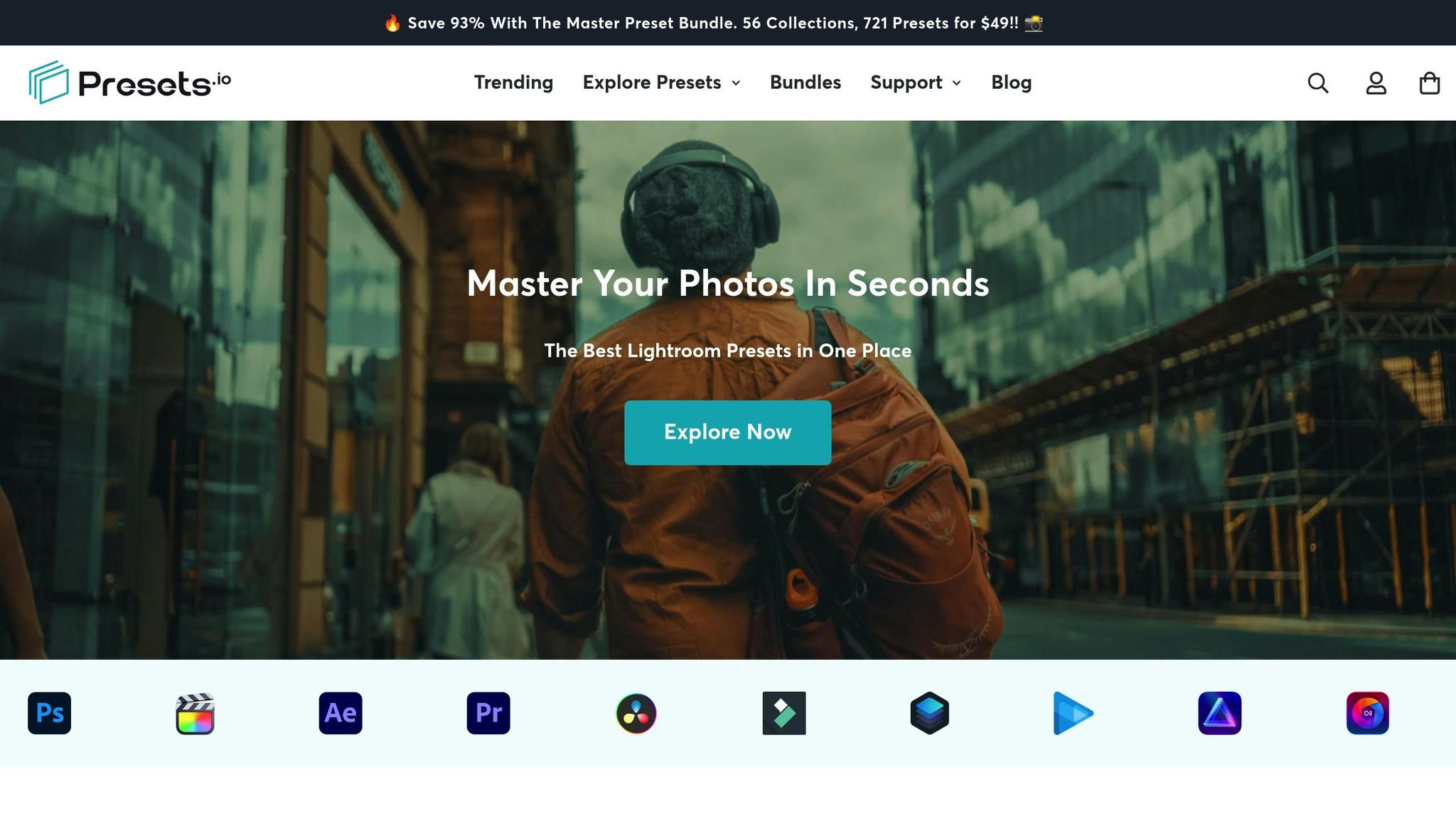
Preset collections can simplify and enhance your editing process, and Presets.io provides curated sets designed to integrate seamlessly with your folder system. These collections are available for both desktop and mobile platforms, making them versatile for various workflows.
Organize Presets.io Collections
Start by downloading your Presets.io collections from the provided link. The download typically includes a ZIP file containing XMP, LRTEMPLATE, and DNG files, ensuring compatibility with both desktop and mobile editing tools.
Set up dedicated folders for each collection to keep your preset library organized. After importing a preset, right-click it, select "Move" > "New Group", and give the folder a clear, descriptive name (e.g., "Presets.io – Cinematic Wedding"). This approach keeps your presets easy to find and manage.
Mirror this organization in Lightroom. Since collections are already grouped by style - such as cinematic, aesthetic, or vintage looks - creating similar groups in Lightroom allows you to quickly locate the right presets for your edits. For example, wedding photographers can place the Cinematic Wedding collection in its own folder, ensuring consistent looks across an entire shoot. Portrait photographers might prefer separating the Aesthetic Collection from film-style presets to cater to different client needs.
For larger bundles, like the Master Preset Bundle (which includes 56 collections and 721 presets), create a parent folder (e.g., "Presets.io – Master Bundle") and organize individual collections based on how often you use them. This method streamlines workflow for extensive purchases and ensures everything stays accessible.
Find New Presets
Once your current collections are organized, you can keep your library fresh by exploring new releases from Presets.io.
Check Presets.io regularly for new collections. For example, the November 2025 Holiday Bundle includes 114 desktop presets, 114 mobile presets, and 114 LUTs for $39.00. You can also use the "My Account" section to re-download previously purchased collections or access installation guides. To stay organized, consider placing seasonal presets in folders labeled with specific dates or events.
Presets.io offers a wide range of options, from individual style collections to larger bundles like The Cinematic Bundle ($39, originally $540) or The Vintage Film Bundle ($39, originally $459). These bundles not only provide a variety of creative looks but also offer substantial savings. By organizing these collections in your custom folder system, you can maximize their value and efficiency in your editing workflow.
Conclusion
Custom preset folders can transform your Lightroom workflow, making it smoother and more efficient. Spending a little time organizing your presets upfront saves you countless hours later by giving you quick access to your go-to styles.
For instance, wedding photographers working through hundreds of images can see a huge difference. Instead of losing time scrolling through endless preset lists, they can jump straight to presets tailored for ceremonies, receptions, or portraits. This streamlined setup helps maintain focus on creativity rather than getting bogged down by tedious searching.
Over time, this approach leads to a cleaner, more efficient workspace that fuels creativity. With features like favorites folders and catalog storage, your top presets are always within reach, even if you switch devices. For professionals working across multiple platforms, this portability is a game changer.
As preset marketplaces like Presets.io continue to grow, organizing your collection becomes even more essential. New collections and massive bundles with hundreds of presets can easily overwhelm your workflow without a solid folder structure. Organized folders not only make managing these large libraries easier but also encourage you to experiment with new looks and creative ideas.
When presets are grouped logically and easy to find, they inspire creativity. You’re more likely to explore and compare different styles, pushing the boundaries of your work, rather than settling for the first option that fits.
FAQs
How can I sync my custom preset folders across multiple devices in Lightroom?
To keep your custom preset folders synced across all your devices in Lightroom, start by ensuring you have Lightroom CC installed and are logged into the same Adobe account on each device. Lightroom CC handles syncing automatically via Adobe's cloud storage.
If you notice syncing issues, double-check that the Sync Presets option is turned on in Lightroom's Preferences. Also, make sure your devices are connected to the internet and that you have enough available cloud storage for the process. Once everything is properly set up, any updates you make to your custom preset folders will sync seamlessly across all devices.
How can I organize my Lightroom presets if I frequently download new collections?
Keeping your Lightroom presets organized can save you a lot of time and frustration. One way to do this is by creating custom folders tailored to themes, styles, or how often you use the presets. For instance, you might sort them into folders like Cinematic, Vintage, or Everyday Edits. This way, you can quickly find the perfect preset for your photos without digging through a long list.
It’s also a good idea to periodically review your presets and clear out the ones you no longer use or that no longer match your editing style. This keeps your workspace clean and makes editing more efficient. If you're on the hunt for new ideas, platforms like Presets.io offer a wide range of high-quality presets to try out.
How can I back up my Lightroom presets to avoid losing them during updates or reorganization?
To safeguard your Lightroom presets, the first step is to locate the preset files on your computer. If you're using Windows, head to Edit > Preferences, or if you're on a Mac, go to Lightroom > Preferences. Once there, navigate to the Presets tab and click on Show All Other Lightroom Presets. This will open the folder where your presets are stored.
Next, copy either the entire folder or specific presets you want to back up, and save them in a secure location. Options like an external hard drive or cloud storage work well for this. Make it a habit to update your backup regularly to protect against accidental loss caused by software updates or file management changes. With a dependable backup, you’ll always be able to restore your presets without hassle.